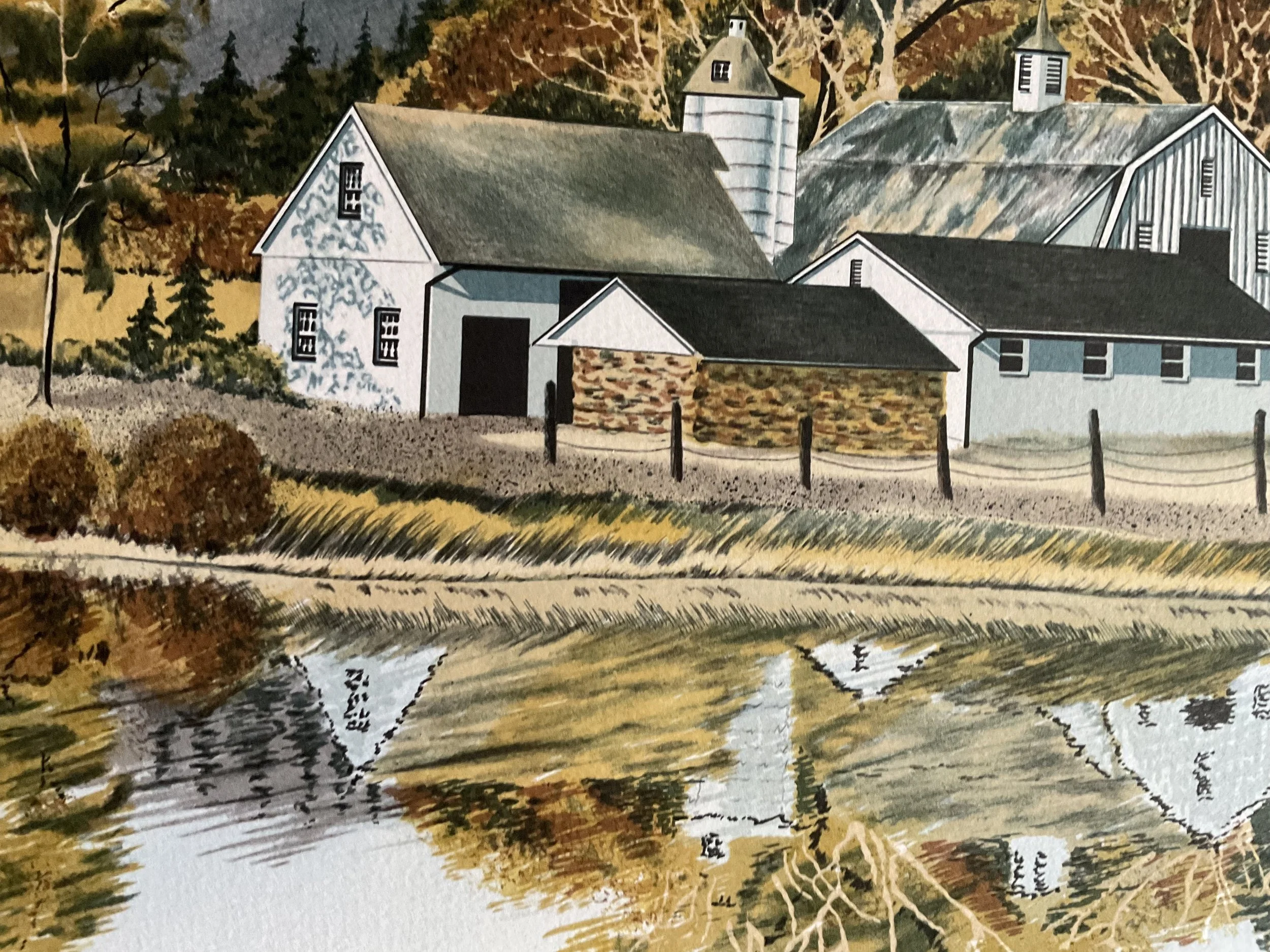
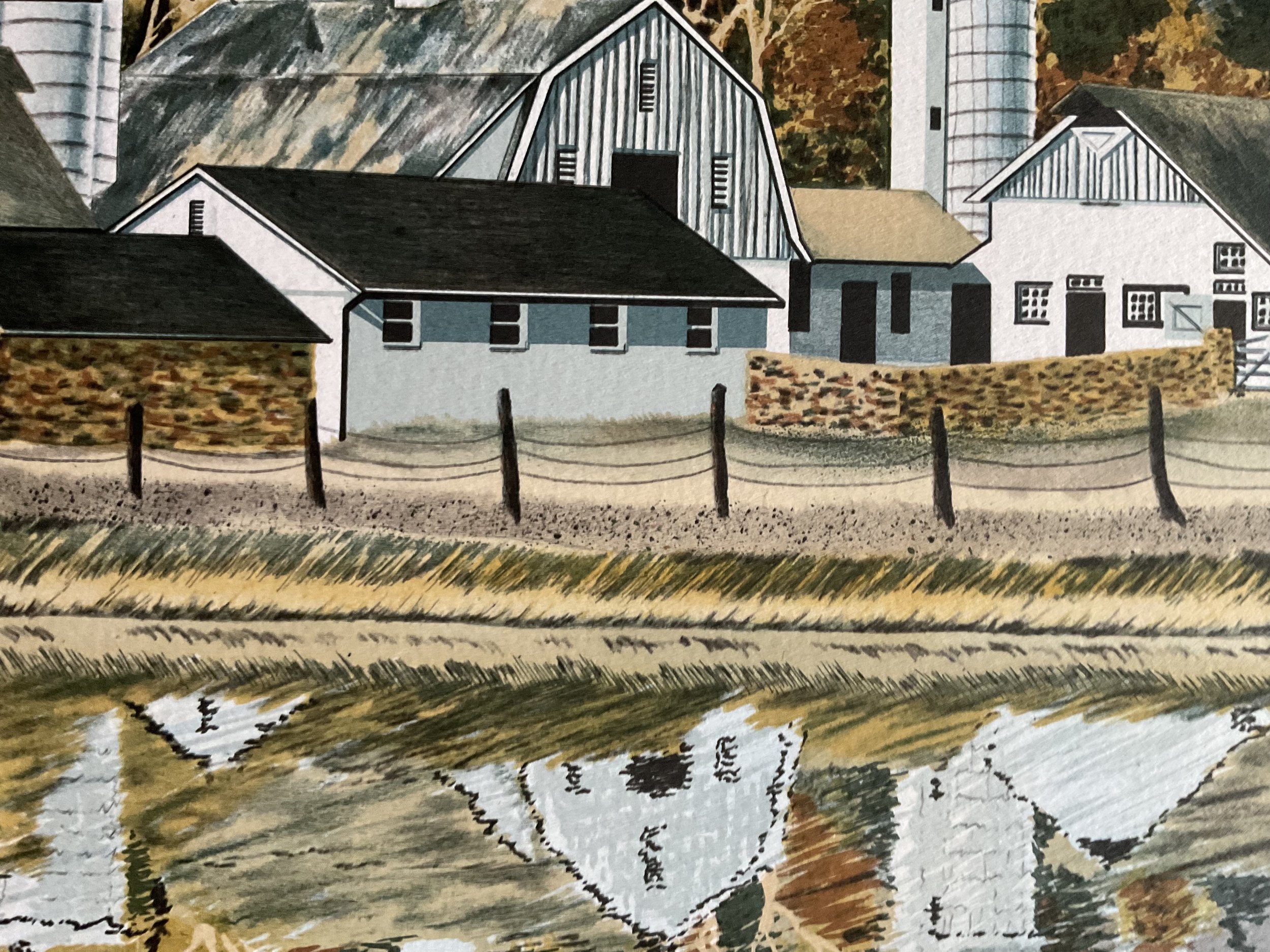
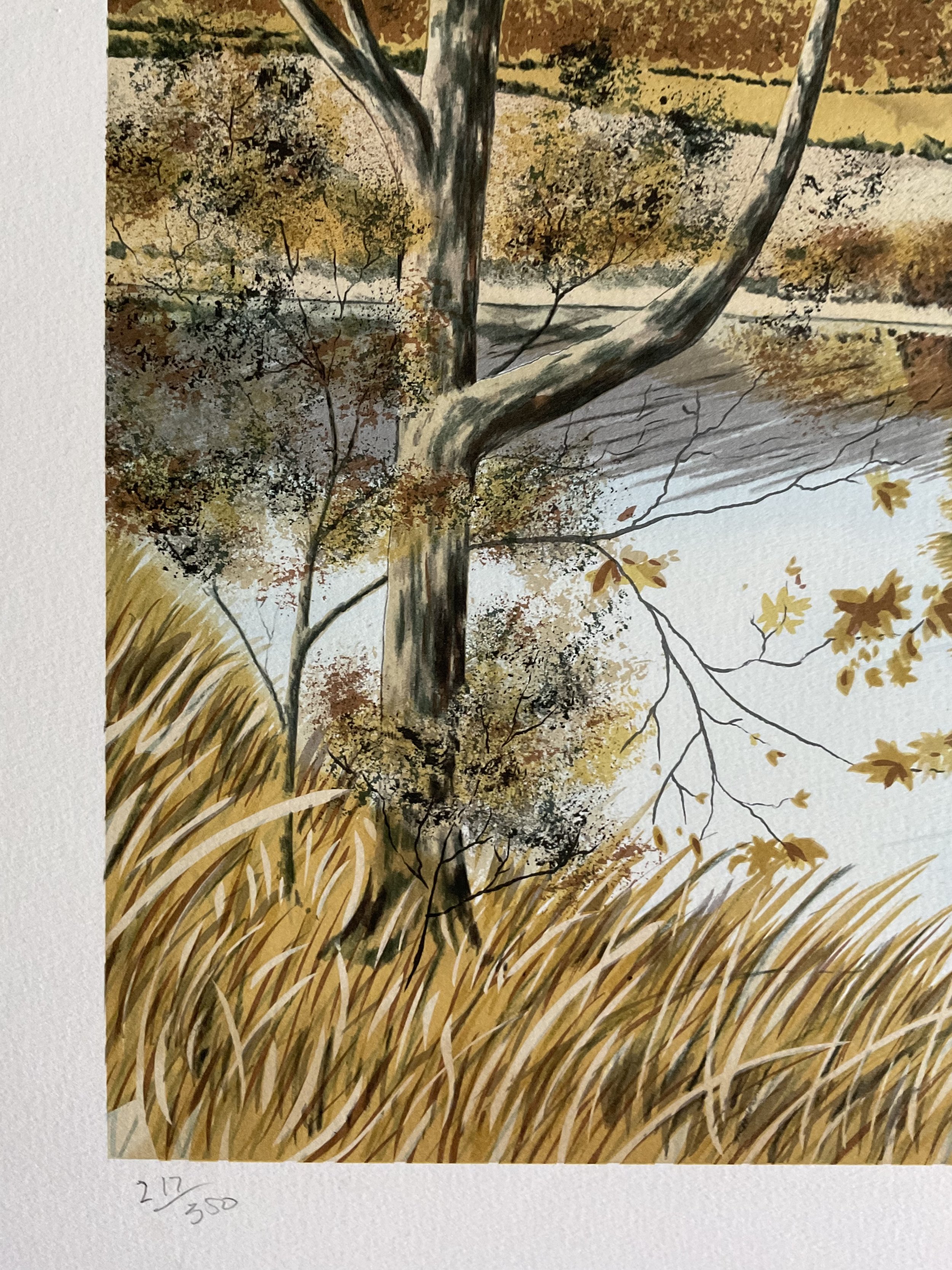
 Image 1 of 5
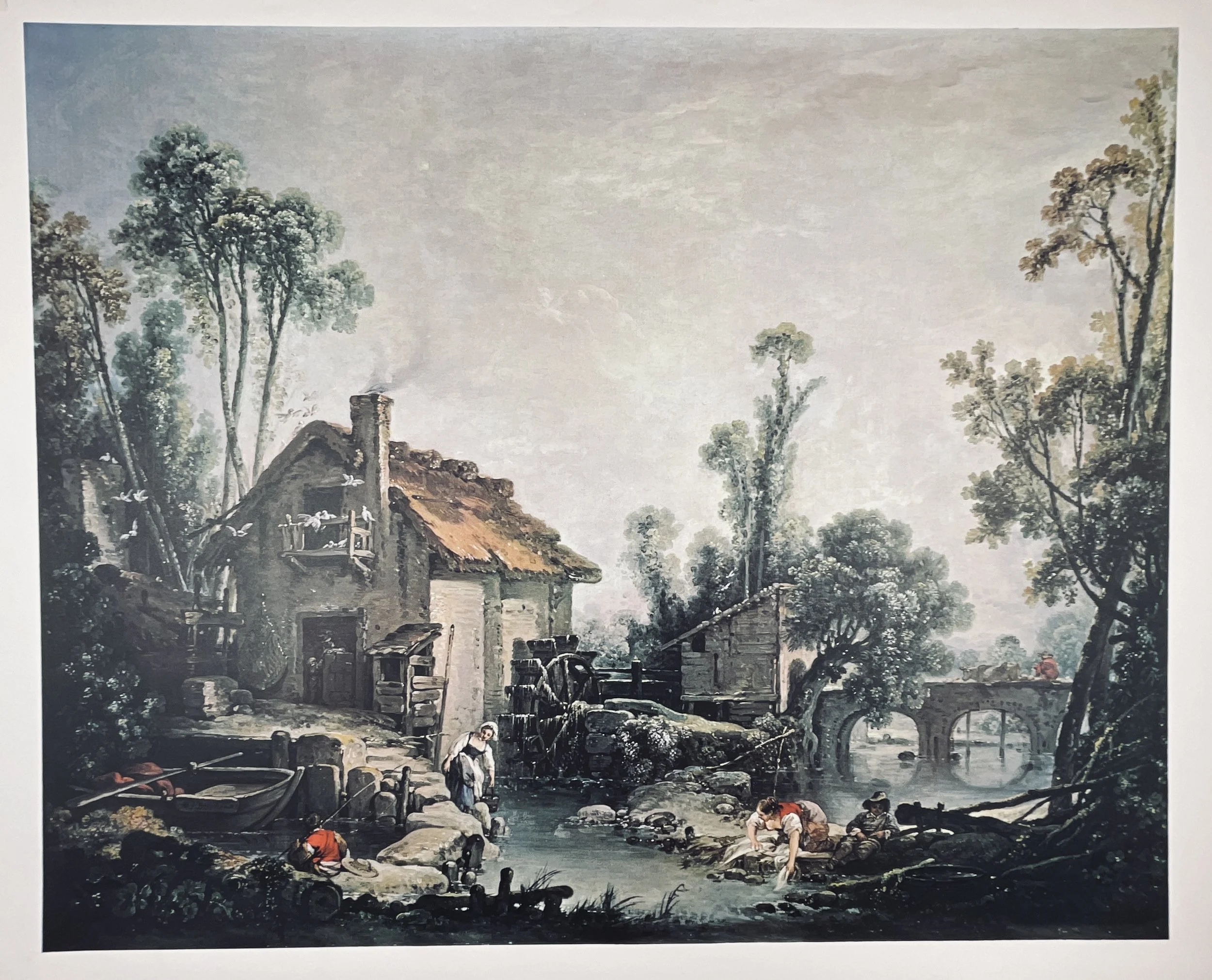 Image 2 of 5
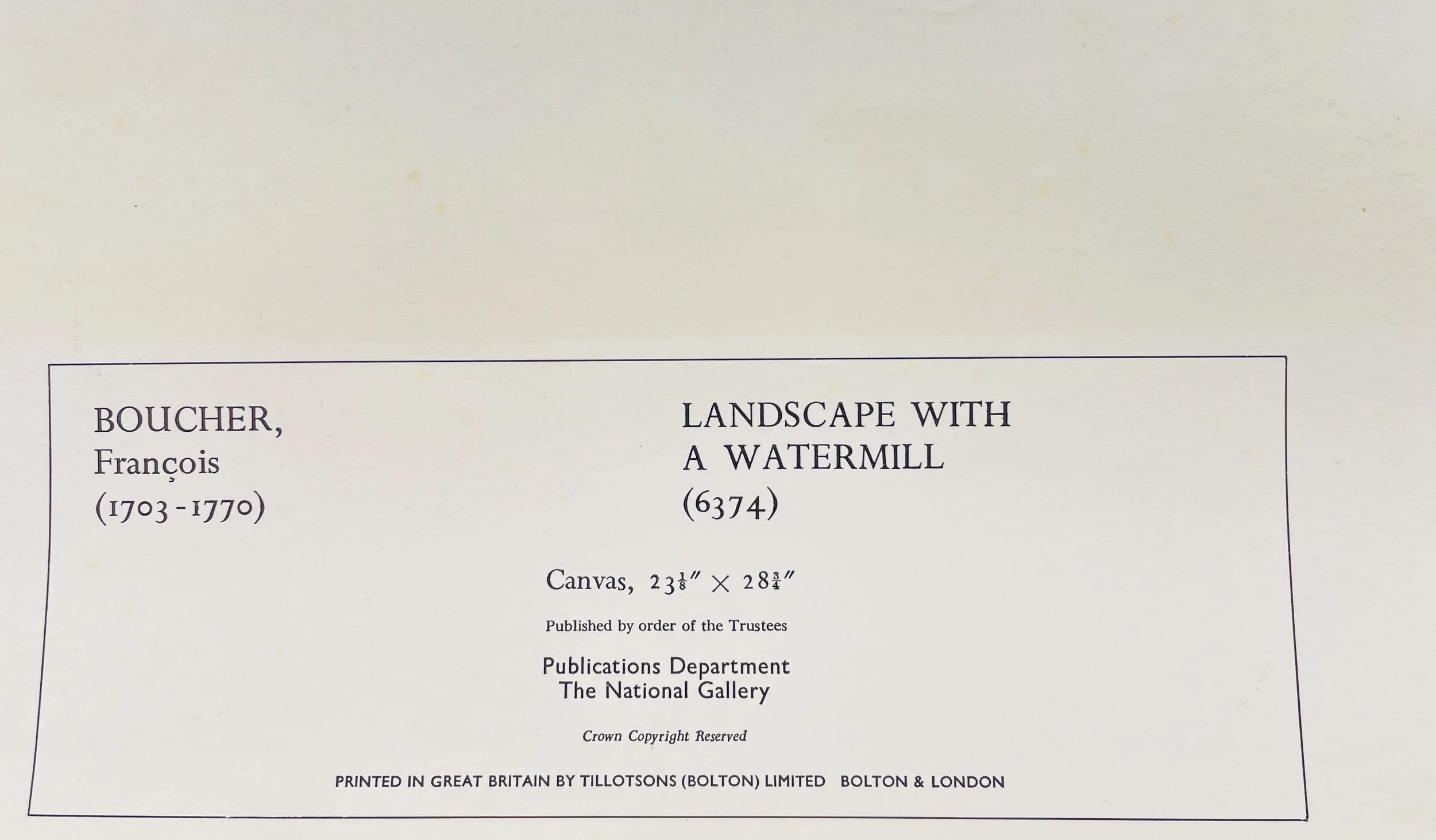 Image 3 of 5
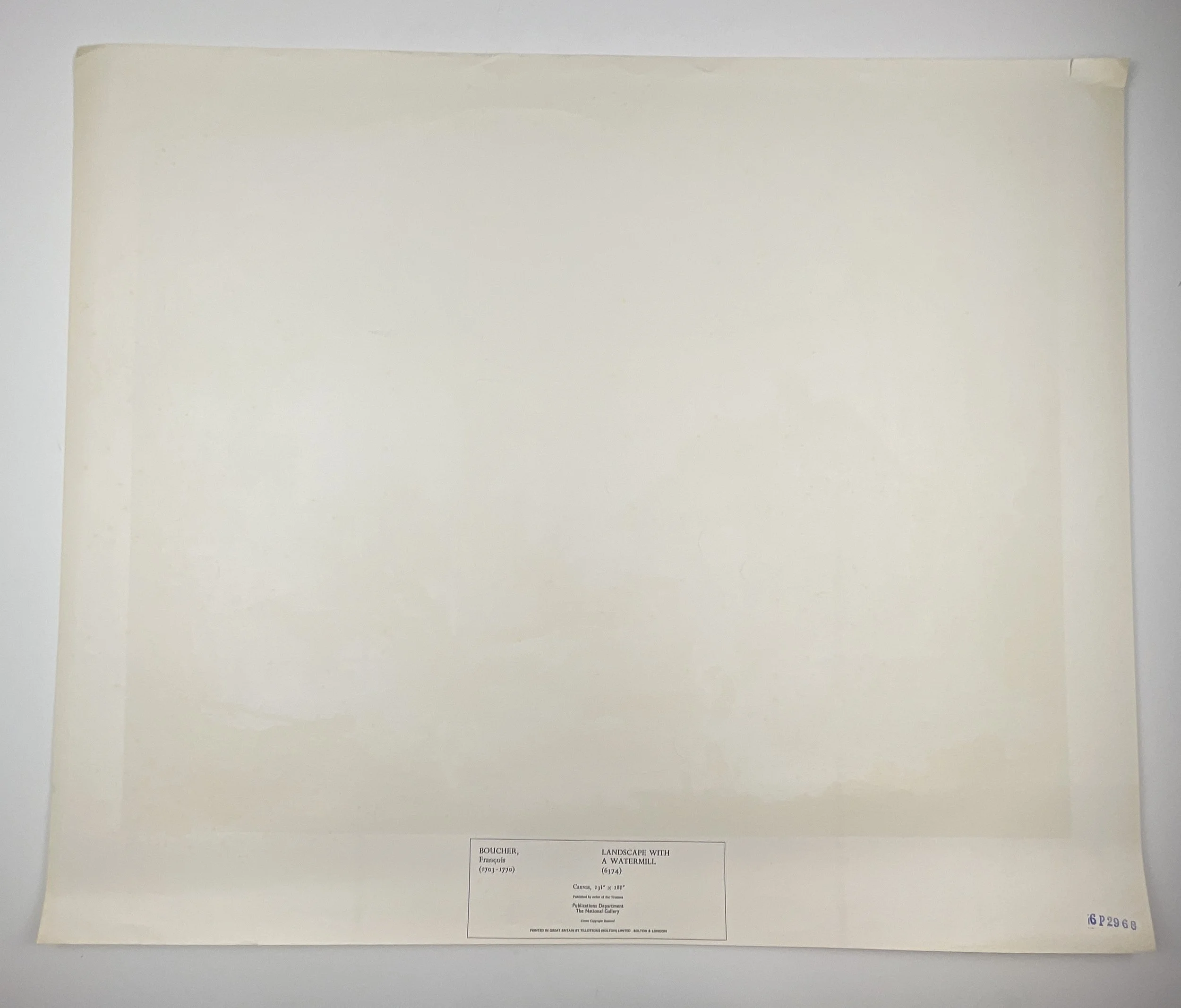 Image 4 of 5
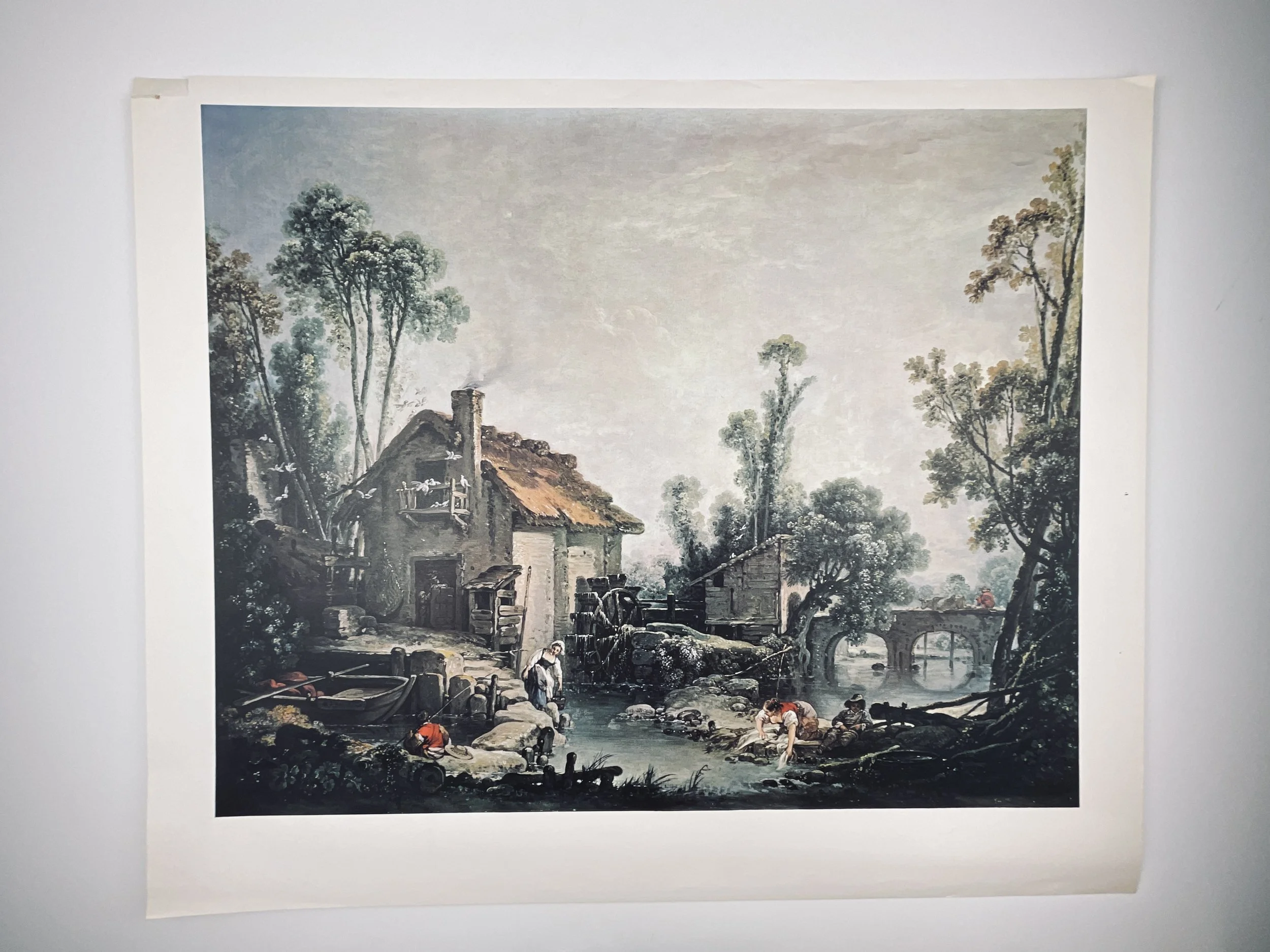 Image 5 of 5
Landscape with a Watermill (after François Boucher, 1703–1770), mid-20th c. National Gallery colour print, 31×26 in; no signature/edition.
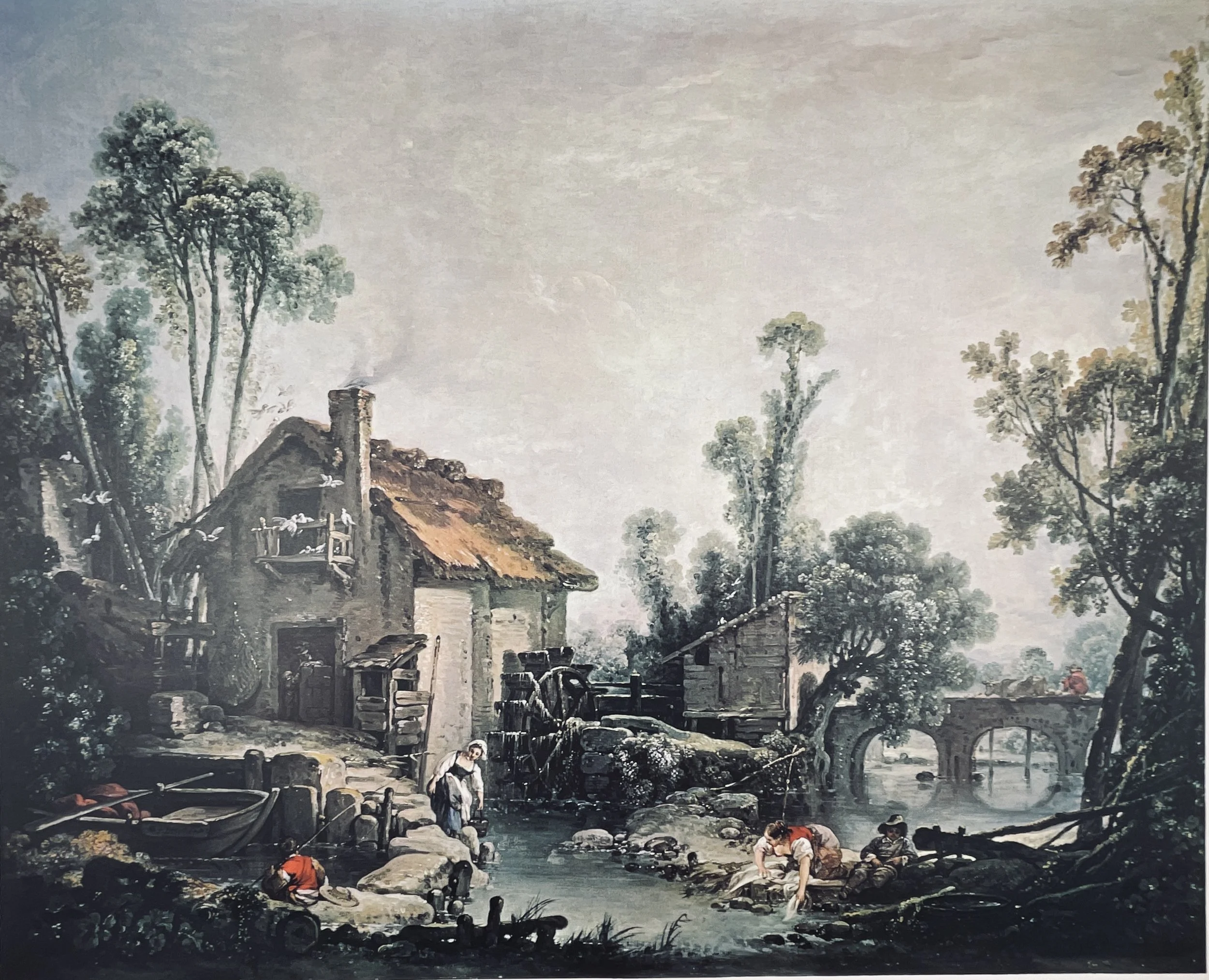
Decorative Rococo landscape reproduction after François Boucher’s celebrated 1755 painting Landscape with a Watermill(NG6374), published by the National Gallery (London) as a vintage colour plate. A picturesque riverside mill, arched bridge, and peasant figures in silvery-green tonality with accents of vermilion capture the theatrical, pastoral spirit admired at the court of Louis XV. Ideal for collectors of Old Master reproduction prints, National Gallery publications, and classic French landscape imagery.
Artwork Description
This work is a National Gallery Publications Department colour reproduction after François Boucher’s oil-on-canvas Landscape with a Watermill (dated 1755; National Gallery inventory NG6374). The scene stages a weathered mill at the water’s edge with working details—millwheel, nets, and figures washing and fishing—balanced by tall trees that frame the view like wings on a set. Boucher’s Rococo sensibility reads as “decorative artificiality” with persuasive observation: luminous, silvery-green atmosphere, softened forms, and lively red notes that punctuate the foreground figures. The original is signed and dated (on a boat at the left), and the National Gallery entry links the motif to Dutch watermill precedents and to Claude’s compositional framing, reinforcing Boucher’s blend of pastoral theatre and landscape tradition.
Artist Biography
François Boucher (Paris, 1703–1770) stands as one of the defining image-makers of French Rococo—an artist whose paintings, prints, designs, and decorative work crystallized the intimate elegance of the mid-18th-century court. Trained initially in Paris (including formative contact with François Lemoyne), Boucher developed early fluency in drawing and print culture, then expanded his visual vocabulary through study in Italy before re-establishing himself in France and rising through the Académie’s orbit. His career unfolded across multiple media: easel painting, book illustration, tapestry and theatre design, and engraving, making him not only a prolific painter but a central decorative intelligence of his moment.
Boucher’s art is inseparable from the tastes and power structures of Louis XV’s France, where mythological idylls, pastorals, and elaborately staged “natural” settings became vehicles for pleasure, refinement, and display. Institutions and scholars repeatedly emphasize his compatibility with courtly scale and sensibility, and his work’s ability to fuse painterly virtuosity with ornamental purpose—qualities that helped make him both celebrated and controversial as artistic fashions shifted later in the century. In landscapes like Landscape with a Watermill (1755), he adapts older models (notably Dutch watermill pictures and Claude’s framing devices) while keeping the surface animated and fluid, treating nature as an orchestrated environment where everyday labor becomes graceful choreography. That ability to render a working scene as an elegant, staged pastoral is a signature Boucher achievement—and one reason his images were widely reproduced and circulated long after his lifetime.
François Boucher (1703–1770) (after). Landscape with a Watermill (after NG6374), vintage National Gallery (London) Publications Department colour reproduction, printed in Great Britain (Tillotsons, Bolton & London). Sheet approx. 31 × 26 in (image after the 1755 original, oil on canvas). Unframed; not signed; no edition noted.
Certificate of Authentication
Certificate of Authentication (COA)
Artist: François Boucher (French, 1703–1770) (after)
Title: Landscape with a Watermill (after National Gallery, London, NG6374)
Work type: Museum publication colour reproduction (National Gallery Publications Department), printed in Great Britain by Tillotsons (Bolton) Limited, Bolton & London (as stated on verso).
Approx. date of this reproduction: mid-20th century (publication-era gallery print; exact year not stated on sheet).
After the original: François Boucher, Landscape with a Watermill, 1755, oil on canvas, 57.2 × 73 cm, National Gallery, London (NG6374).
Dimensions (reported): 31 × 26 in.
Signature/edition: not signed; no edition number present (reproduction after a signed/dated original).
Current owner (for provenance records): Artfind Gallery, Washington, DC.
Authorized by: Artfind Gallery (Washington, DC)
Condition
Overall good vintage condition for a gallery-issued colour reproduction. Visible age toning and scattered foxing on the verso; minor edge wear and soft handling creases/waviness to margins; no obvious tears visible in the provided images. Conservation note: recommend archival matting and UV-filter glazing if framed, and humidity-controlled storage to limit further foxing/toning.
Provenance chain
Current owner: Artfind Gallery, Washington, DC
Acquired from: Mitch Morse Gallery (publisher/agent source for collection)
Prior locations of acquisition: New York City, United States and Europe (as acquired by Mitch Morse Gallery)
Artwork type context: National Gallery (London) Publications Department reproduction print (published by order of the Trustees; printed by Tillotsons, Bolton & London, per verso text)
Landscape with a Watermill (after François Boucher, 1703–1770), mid-20th c. National Gallery colour print, 31×26 in; no signature/edition.
Decorative Rococo landscape reproduction after François Boucher’s celebrated 1755 painting Landscape with a Watermill(NG6374), published by the National Gallery (London) as a vintage colour plate. A picturesque riverside mill, arched bridge, and peasant figures in silvery-green tonality with accents of vermilion capture the theatrical, pastoral spirit admired at the court of Louis XV. Ideal for collectors of Old Master reproduction prints, National Gallery publications, and classic French landscape imagery.
Artwork Description
This work is a National Gallery Publications Department colour reproduction after François Boucher’s oil-on-canvas Landscape with a Watermill (dated 1755; National Gallery inventory NG6374). The scene stages a weathered mill at the water’s edge with working details—millwheel, nets, and figures washing and fishing—balanced by tall trees that frame the view like wings on a set. Boucher’s Rococo sensibility reads as “decorative artificiality” with persuasive observation: luminous, silvery-green atmosphere, softened forms, and lively red notes that punctuate the foreground figures. The original is signed and dated (on a boat at the left), and the National Gallery entry links the motif to Dutch watermill precedents and to Claude’s compositional framing, reinforcing Boucher’s blend of pastoral theatre and landscape tradition.
Artist Biography
François Boucher (Paris, 1703–1770) stands as one of the defining image-makers of French Rococo—an artist whose paintings, prints, designs, and decorative work crystallized the intimate elegance of the mid-18th-century court. Trained initially in Paris (including formative contact with François Lemoyne), Boucher developed early fluency in drawing and print culture, then expanded his visual vocabulary through study in Italy before re-establishing himself in France and rising through the Académie’s orbit. His career unfolded across multiple media: easel painting, book illustration, tapestry and theatre design, and engraving, making him not only a prolific painter but a central decorative intelligence of his moment.
Boucher’s art is inseparable from the tastes and power structures of Louis XV’s France, where mythological idylls, pastorals, and elaborately staged “natural” settings became vehicles for pleasure, refinement, and display. Institutions and scholars repeatedly emphasize his compatibility with courtly scale and sensibility, and his work’s ability to fuse painterly virtuosity with ornamental purpose—qualities that helped make him both celebrated and controversial as artistic fashions shifted later in the century. In landscapes like Landscape with a Watermill (1755), he adapts older models (notably Dutch watermill pictures and Claude’s framing devices) while keeping the surface animated and fluid, treating nature as an orchestrated environment where everyday labor becomes graceful choreography. That ability to render a working scene as an elegant, staged pastoral is a signature Boucher achievement—and one reason his images were widely reproduced and circulated long after his lifetime.
François Boucher (1703–1770) (after). Landscape with a Watermill (after NG6374), vintage National Gallery (London) Publications Department colour reproduction, printed in Great Britain (Tillotsons, Bolton & London). Sheet approx. 31 × 26 in (image after the 1755 original, oil on canvas). Unframed; not signed; no edition noted.
Certificate of Authentication
Certificate of Authentication (COA)
Artist: François Boucher (French, 1703–1770) (after)
Title: Landscape with a Watermill (after National Gallery, London, NG6374)
Work type: Museum publication colour reproduction (National Gallery Publications Department), printed in Great Britain by Tillotsons (Bolton) Limited, Bolton & London (as stated on verso).
Approx. date of this reproduction: mid-20th century (publication-era gallery print; exact year not stated on sheet).
After the original: François Boucher, Landscape with a Watermill, 1755, oil on canvas, 57.2 × 73 cm, National Gallery, London (NG6374).
Dimensions (reported): 31 × 26 in.
Signature/edition: not signed; no edition number present (reproduction after a signed/dated original).
Current owner (for provenance records): Artfind Gallery, Washington, DC.
Authorized by: Artfind Gallery (Washington, DC)
Condition
Overall good vintage condition for a gallery-issued colour reproduction. Visible age toning and scattered foxing on the verso; minor edge wear and soft handling creases/waviness to margins; no obvious tears visible in the provided images. Conservation note: recommend archival matting and UV-filter glazing if framed, and humidity-controlled storage to limit further foxing/toning.
Provenance chain
Current owner: Artfind Gallery, Washington, DC
Acquired from: Mitch Morse Gallery (publisher/agent source for collection)
Prior locations of acquisition: New York City, United States and Europe (as acquired by Mitch Morse Gallery)
Artwork type context: National Gallery (London) Publications Department reproduction print (published by order of the Trustees; printed by Tillotsons, Bolton & London, per verso text)